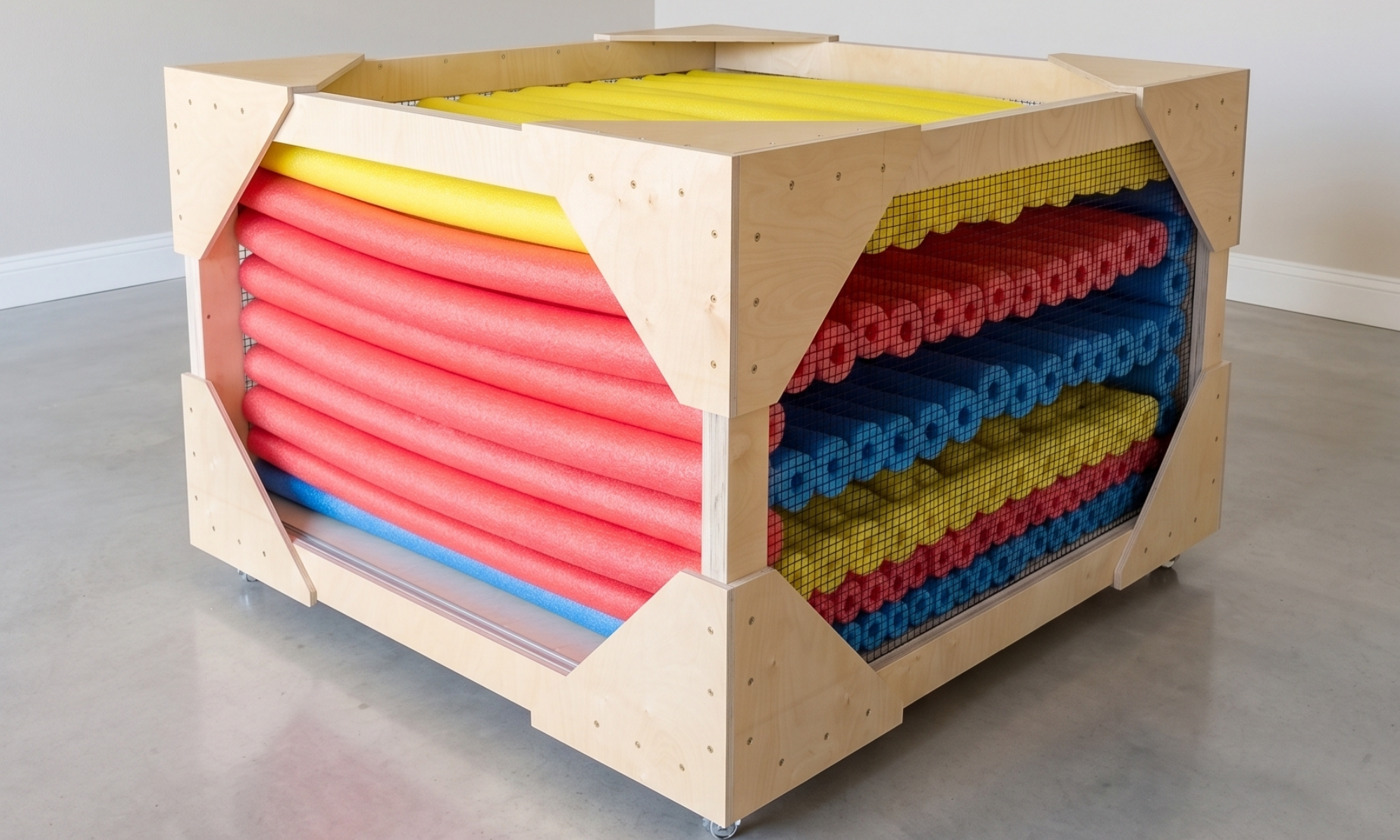
The Wriggleworm by Wriggle Box LLC can be used in pediatric occupational therapy (OT) to provide a rich combination of proprioceptive and tactile feedback. Because it requires a child to actively crawl through resisting foam noodles, it blends “heavy work” with deep pressure.
Occupational therapists and parents can utilize the structure for several therapeutic goals:
1. Promoting Sensory Regulation & Calming
How it works: The primary purpose of the Wriggleworm is to offer deep pressure input uniformly from all sides as the child maneuvers through it.
OT Application: Use it as a self-regulation tool at the start of a session to calm an over-stimulated sensory system or to provide grounding input for a sensory seeker. The deep touch pressure helps lower anxiety and improves attention and focus for autistic children or those with ADHD.
2. “Heavy Work” and Proprioceptive Input
How it works: Moving through the tightly bound shock/bungee cords and foam noodles forces the child to use their muscles against resistance.
OT Application: Incorporate it into a “sensory diet” as a heavy work activity. Therapists can have the child push through the box repeatedly to satisfy a craving for deep joint and muscle compression, helping them feel more organized in space.
3. Core Strength & Postural Control
How it works: Navigating the structure requires active physical exertion, including army crawling, swimming movements, and pushing.
OT Application: Use it to build core, neck, and upper-body strength. You can place a favorite toy at the opposite end of the Wriggleworm, encouraging the child to sustain a prone (on-the-stomach) extension or crawl against resistance to retrieve it.
4. Motor Planning & Bilateral Coordination
How it works: The noodles move and shift as the child pushes through, meaning the body faces unpredictable, mild resistance.
OT Application: This forces the child to use motor planning (figuring out how to move their limbs to overcome an obstacle) and bilateral coordination (using both sides of the body together) to successfully make it from one side of the box to the other.
5. Transitioning & Desensitization
How it works: The tight squeeze and full-body tactile sensation mimic the feeling of “digging through the earth”.
OT Application: For children with tactile defensiveness (hypersensitivity to touch), gradual exposure to the Wriggleworm can help desensitize the nervous system to full-body clothing pressure or unexpected physical touch.
What is a Wriggleworm?
The Wriggleworm is a full-body sensory regulation play structure created by Wriggle Box LLC.
What is the Wriggleworm?
- Design: It features a box filled with vibrant foam pool noodles held in place by shock and bungee cords.
- Experience: Users crawl or “wriggle” through the noodles, which mimic the sensation of digging through the earth.
- Sensory Feedback: It provides mild-to-moderate or deep pressure input all around the body while requiring active physical exertion like swimming or crawling.
- Purpose: It helps autistic individuals, children with ADHD, sensory seekers, and neurodivergent users self-regulate, lower anxiety, and improve focus.
- Availability: Wriggle Box LLC launched an Indiegogo crowdfunding campaign for the Wriggleworm in September 2026 to bring the structure to homes, classrooms, and therapy clinics.